 Daily New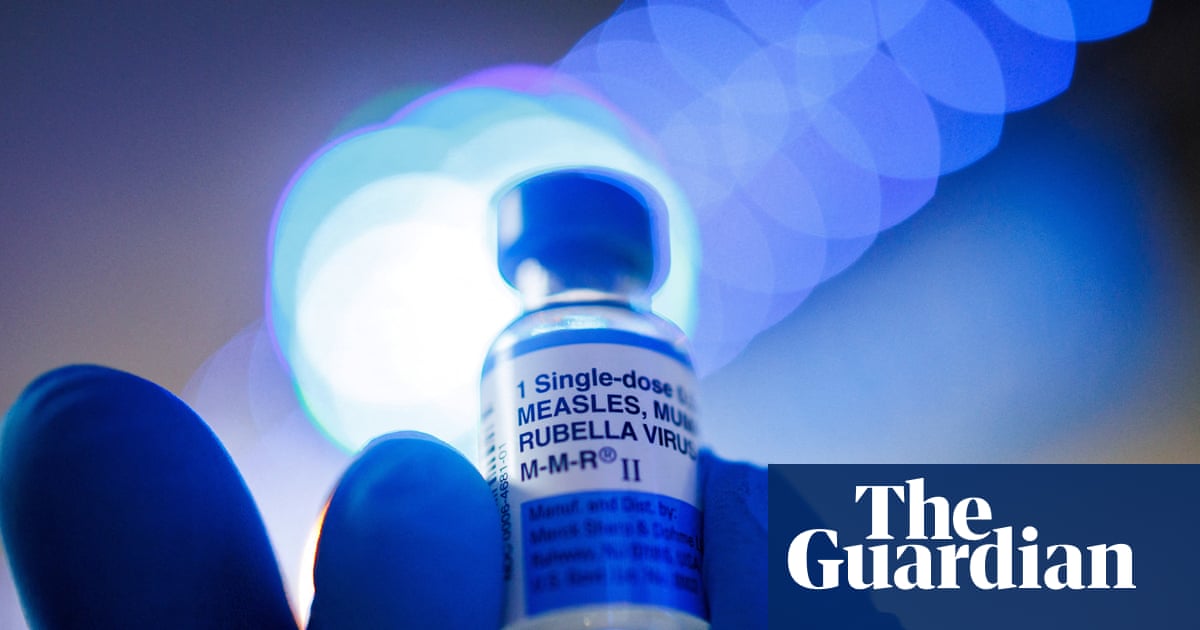
The US Centers of Disease Control and Prevention (CDC) updated its measles dashboard on Friday – but it’s still not counting four measles deaths in Pennsylvania , where the outbreak appears to be accelerating and cases are appearing in ways providers have never seen before. Members of Congress on Monday requested an “immediate briefing” on the decision to change how measles deaths are reported as cases continue to rise throughout the United States, reaching levels not seen in decades. A possible measles exposure was reported in the neonatal intensive care unit (NICU) at Children’s Hospital of Philadelphia last week.
The delay in death reporting is “curious” even after the CDC switched how it counts deaths, said Debra Houry, former CDC chief medical officer. It takes one to two days for the CDC to receive updated data to the National Center for Health Statistics (NCHS) after states finish death investigations. “Pennsylvania concluded the investigation on the first two deaths, so CDC would have these records by now,” Houry said.
Meanwhile, the outbreak “seems to be accelerating”, said Dr John Goldman, an infectious disease specialist at the University of Pittsburgh Medical Center. “And we’re seeing, actually, types of measles we’ve never seen before,” he added. Doctors are now treating congenital measles – newborns who contracted the virus in utero or at birth – which was once exceedingly rare because most pregnant people were protected by vaccines or, before immunization, surviving measles in childhood.
“Because of this, we’re literally seeing new forms of measles,” Goldman said. “We don’t have a lot of information about what happens with it.” Pennsylvania has reported 731 cases , but that number is likely an undercount, he said. Frequently when patients come to the hospital with measles, they mention that others at home are sick as well – but they haven’t been tested, Goldman said.
On average, one to three people for every 1,000 cases will die of measles, and one in five will be hospitalized. The current deaths and hospital admissions in Pennsylvania are “definitely not proportional to what would be expected”, Houry said, and she believes the official numbers are “very much an undercount”. Under-testing can make it challenging to do contact tracing and sick people may not realize they need to isolate – both of which can make the spread of measles more likely.
Providers are preparing for more cases and more deaths. “It’s not rocket science. If we see more measles, we’ll see more deaths,” Goldman said.
“I suspect that we’re not going to see a break until most people in most communities are immune either by vaccine or infection.” Typically, the CDC collects data from states, including causes of death. Death certificates are issued at the state or local level; there are no federal death certificates. But now, the agency is working with the Council of State and Territorial Epidemiologists to define deaths from measles.
While the CDC has its own measles case definition, it has relied upon the World Health Organization’s definition of measles deaths. Until a measles death definition is created, the CDC is relying on NCHS data, which “identifies measles as the underlying cause based on death record information submitted by the states”, said Emily Hilliard, a spokesperson for the US Department of Health and Human Services (HHS). She did not respond to the Guardian’s questions about why the death count was still delayed, or whether all deaths would receive a CDC definition.
Before this outbreak, measles deaths were rare in America; there were none for a decade. “When there aren’t deaths, you don’t need a precise definition,” Houry said. Pennsylvania developed a definition, and the CDC could consider adopting it, she said.
Erica Schwartz, the CDC director, denied in an interview that deaths were being miscounted for political reasons, pointing instead to the process of creating a definition. “If someone got hit by a bus, and they happened to have Covid, often that was called a Covid-related death,” Schwartz said, referencing misinformation about how Covid deaths were counted. In reality, Covid deaths were likely under-counted .
Pennsylvania’s definition of “measles death” clearly excludes unrelated deaths, so the bus scenario would not apply, Houry said. “Dr Schwartz’s comments are not only not helpful, but contribute to misinformation.” But this isn’t the most important issue right now, she added. “I would focus less on the definition itself and responding to the measles outbreak, and that’s what the focus of the CDC director should be.” Robert F Kennedy Jr, HHS secretary, has cast doubt on the Pennsylvania deaths and reportedly instructed Schwartz not to include them in the CDC tally.
Kennedy only mentioned the measles outbreak once in a speech spanning nearly an hour and a half at an anti-vaccine conference on Thursday. He noted only that deaths from measles are headline news and he asked that severe side effects and deaths from vaccines get the same attention. About one to two people in a million experience severe side effects from vaccines, while with measles one in five people are hospitalized and one to three in 1,000 die.
Pennsylvania has responded aggressively to the outbreak, standing up more than 100 pop-up clinics and requesting additional vaccination support from the CDC. The state department of health has “done a spectacular job of dealing with this”, Goldman said. Tests have a 24-hour turnaround time.
“I have called them up on a Thursday before the holiday weekend and arranged for them to do testing before it closed at noon the following day,” Goldman said. “They have provided us with information, and they have provided us with really really good support.” While there is a likely undercount of cases, “it’s not because they couldn’t get a test”, he said. “It’s because they were sick at home and did not seek medical care.” The response hasn’t been limited to the health department, Houry noted.
“Health systems and clinicians are really stepping up across the state to get vaccines to their communities.” Before this outbreak, Goldman was the rare American doctor who had seen measles, once in 1988 and once in 1992. Between 1992 and 2026, he didn’t see a single case. Now, “we’re seeing at least one every day”, he said.
He’s preparing for three to six more months of this. “Never in my life did I think I was ever going to see measles again,” he said. He fears for other vaccine-preventable diseases: whooping cough, diphtheria, polio.
“In a way, I think this is a warning,” he said. “What worries me is measles is conceivably the canary in the coal mine.”
Source: The Guardian